Gender and National Apartheid – keiwanfatehi.com
2022 - 2024 Iraq

Gender and National Apartheid

In a world full of discrimination, being a woman and being Kurdish is not without similarities. Women’s dreams of freedom, equality, emancipation, and respect are dashed by patriarchal systems, while the Kurds, because of their nationality, are irredeemably opposed as hereditary enemies. In Iran, women and Kurds share a broken destiny, walking a tightrope between life and death.

These two words, women and Kurds, have now become synonymous with resistance. Resistance to discriminatory global structures full of patriarchal norms.

This definition of a woman is more common in a place like Iran under the dictatorship of the Islamic Republic, which in the 21st century with theocratic rule revived discriminatory structures and institutionalized gender and national apartheid.

Women in Kurdistan and Iran have always suffered from historical discrimination, denial of identity, and systematic oppression.

Women are oppressed by law and by an ideological system. They are deprived of the right to divorce and custody of the child, voluntary coverage, the right to go to the stadium, to get a passport, and to travel without the permission of a man… They don’t even have the right to sing in public, to dance, to ride a bike, to do most of the sports and jobs, and became half-human in matters such as inheritance and testimony in court.

The Iranian regime, which claims to be fighting for the freedom of its people, has now turned in on itself, fighting only for its own political survival. The Iran we know today in 2023 executes opponents every day, when women are not killed simply for a strand of hair sticking out, as was the case with Zina Amini.

The revolution of Jin, Jiyan, Azadi was unique in history, especially in the Middle East region. Many people died, others lost their eyes, were kidnapped, disappeared, or executed… Yet their only claim was to the right to life and to be different.

Among them, the number of Kurdish women who have chosen to join the Peshmerga ranks as a way of fighting against the dictatorship of the Islamic Republic of Iran is huge. Of course, this choice of exile was not easy it was for them the only solution to fight for their rights. In Iran, the Islamic Republic completely blocked the political space and closed all the doors to expressing protest, and worse than that, it has made all areas of social life securitized and militarized. In this way, Kurdish women who consider themselves victims of gender-ethnic double discrimination and oppression have no choice.

The Peshmerga women of the Kurdish Partys escaped from their cage and entered the political arena side by side with men to practice democracy. The PDKI, an illegal organization created in the 1945s, survived the repression by relocating to Iraq, giving these women the opportunity to fight freely.

A difficult exile for all these women cut off from their families and friends, but they intend to continue to resist this intense repression in their own way. They all know that they are not safe anywhere, as Iran regularly targets them with drone and missile attacks from across their borders.

It is their story that I intend to tell you through my images.

Gender and National Apartheid

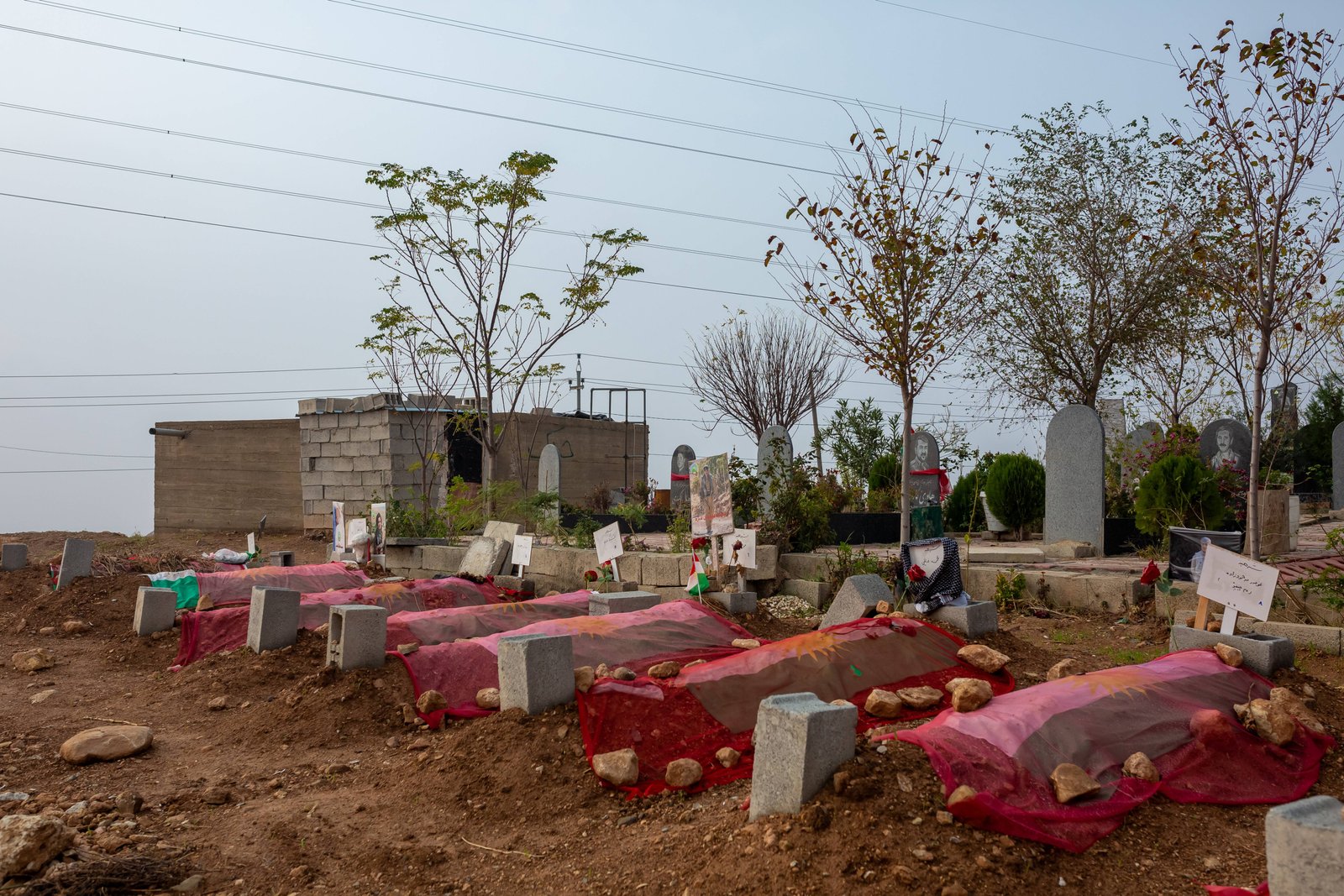
This image displays the burial site of members of the PDKI who lost their lives in missile attacks carried out by the Iranian regime. Over the last five years, the Iranian regime has launched multiple assaults with drones and ballistic missiles on the compounds of East Kurdistan’s political parties in exile in the Kurdistan Region of Iraq.

Camera Make Canon
Camera Model EOS 5D Mark III
Lens 35mm
ISO 640
Aperture f/5.6
Shutter 1/2500
Focal 35mm
Location Iraq
Gender and National Apartheid

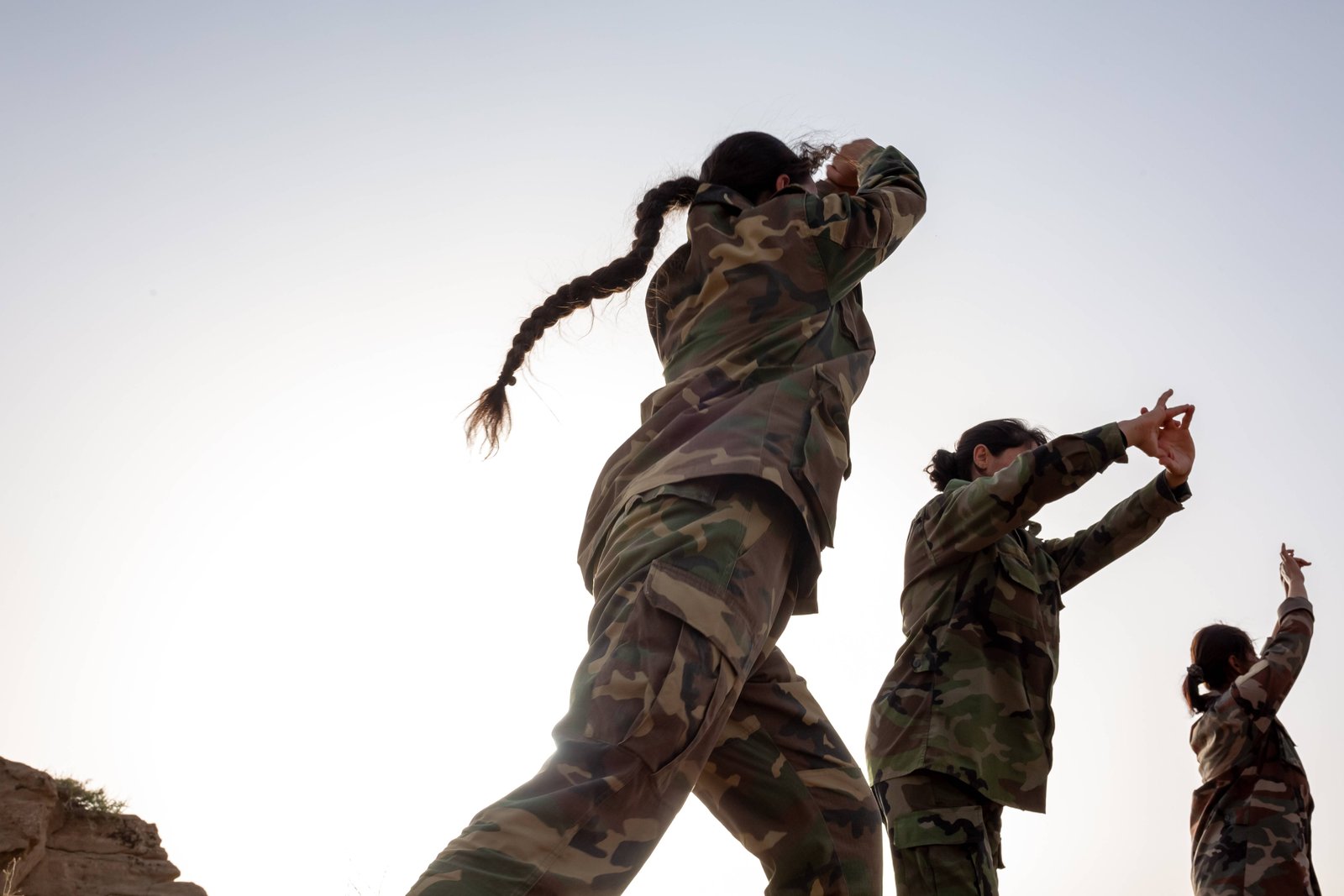
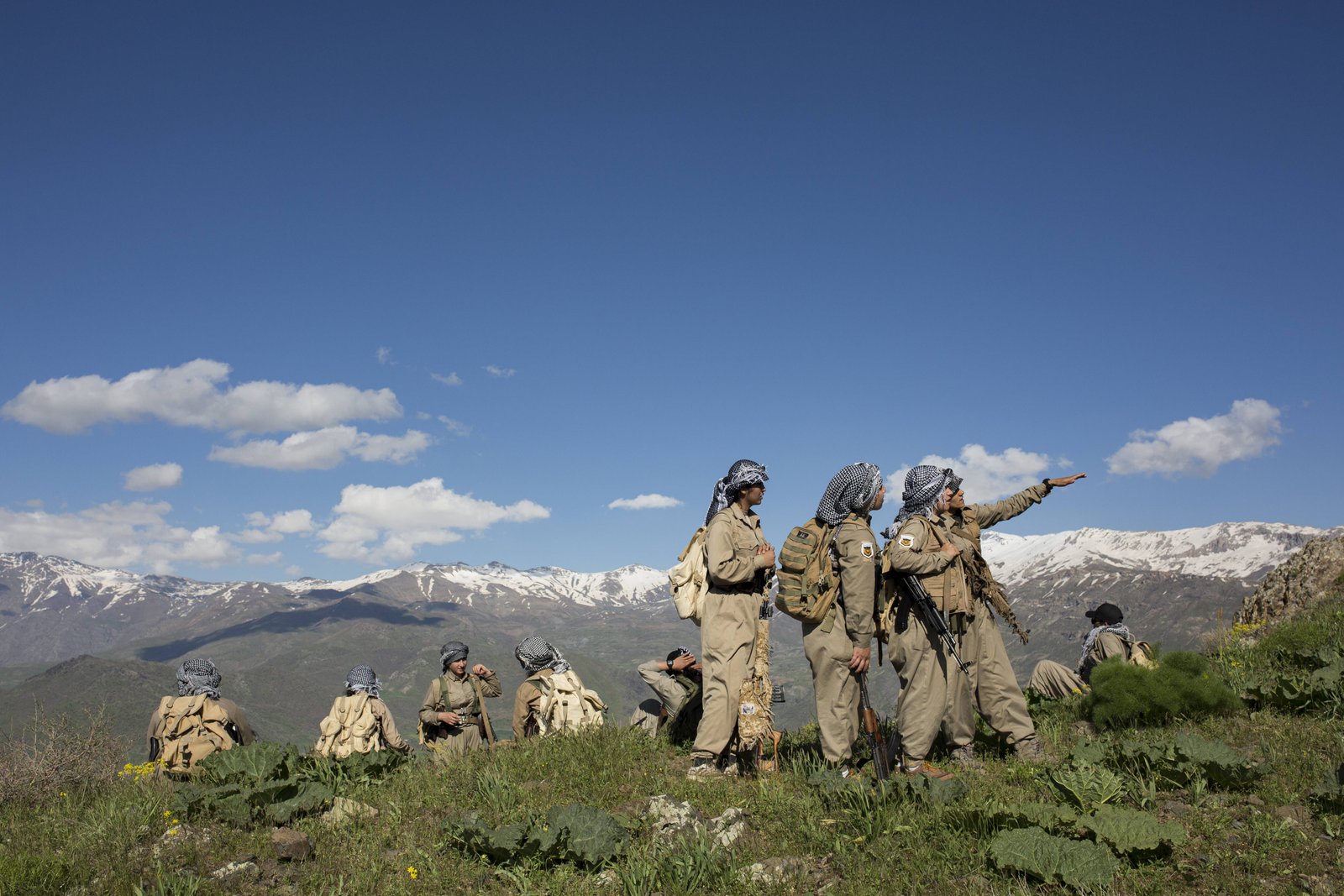
Female Peshmerga fighters from the PDKI undergo military and physical training. Some of these women actively participated in the Jin, Jiyan, Azadi uprisings. However, due to their involvement, they were forced to leave their homeland and join the political parties of East Kurdistan, which have bases in the mountainous areas of South Kurdistan.

Camera Make Canon
Camera Model EOS 5D Mark III
Lens 35mm
ISO 640
Aperture f/11
Shutter 1/400
Focal 35mm
Location Iraq
Gender and National Apartheid

A group of female Peshmerga fighters from CPI-Komala having a break after an extensive training session. One of them expresses, “To be in the movement, one must maintain a constant state of movement”.

Camera Make Canon
Camera Model EOS 5D Mark IV
Lens 35mm
ISO 250
Aperture f/4
Shutter 1/200
Focal 35mm
Location Iraq
Gender and National Apartheid

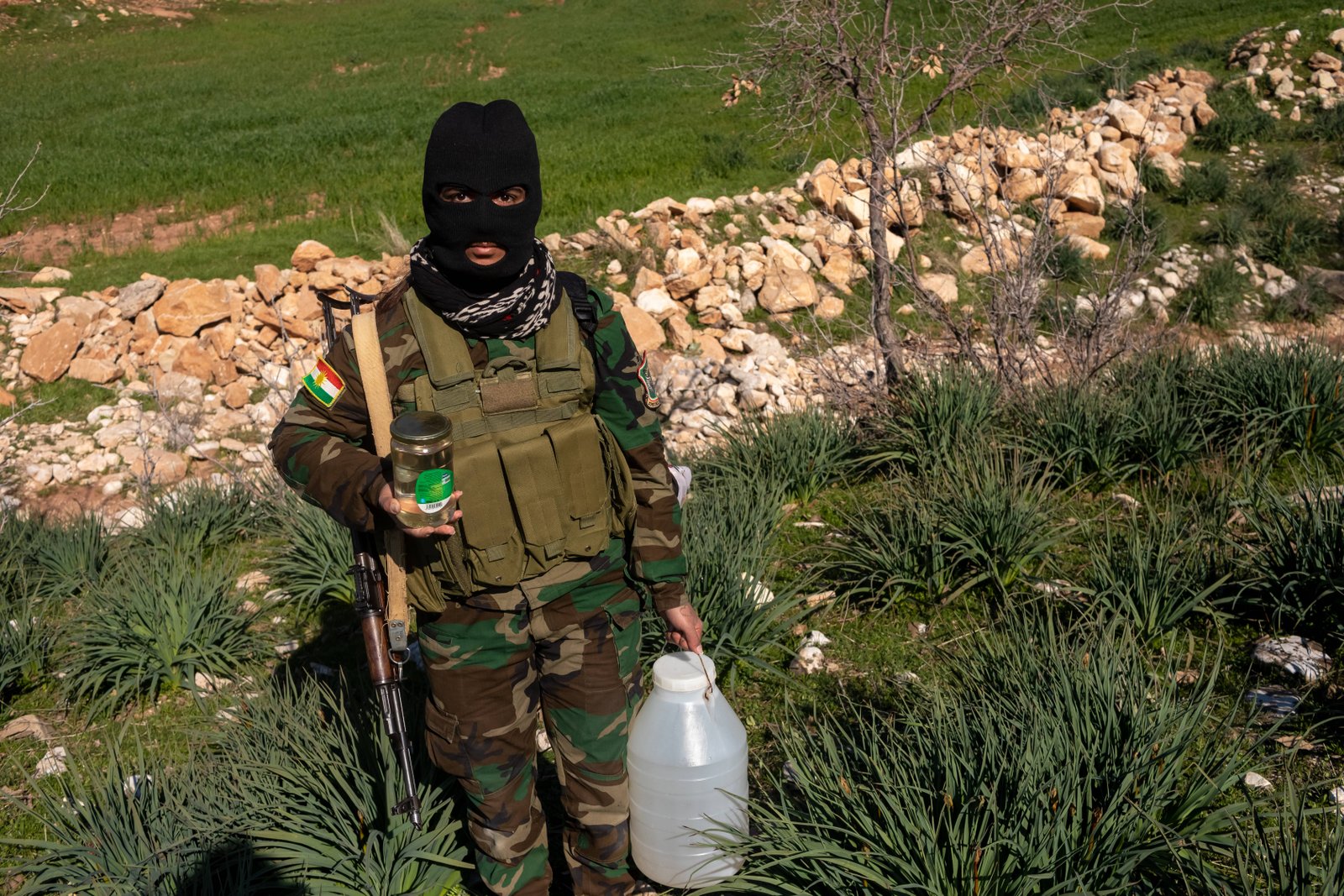
A PAK female Peshmerga fighter carries a container of water and a small vessel of petrol (naft) to cook and illuminate their base.

Camera Make Canon
Camera Model EOS 5D Mark IV
Lens 35mm
ISO 800
Aperture f/8
Shutter 1/2500
Focal 35mm
Location Iraq
Gender and National Apartheid

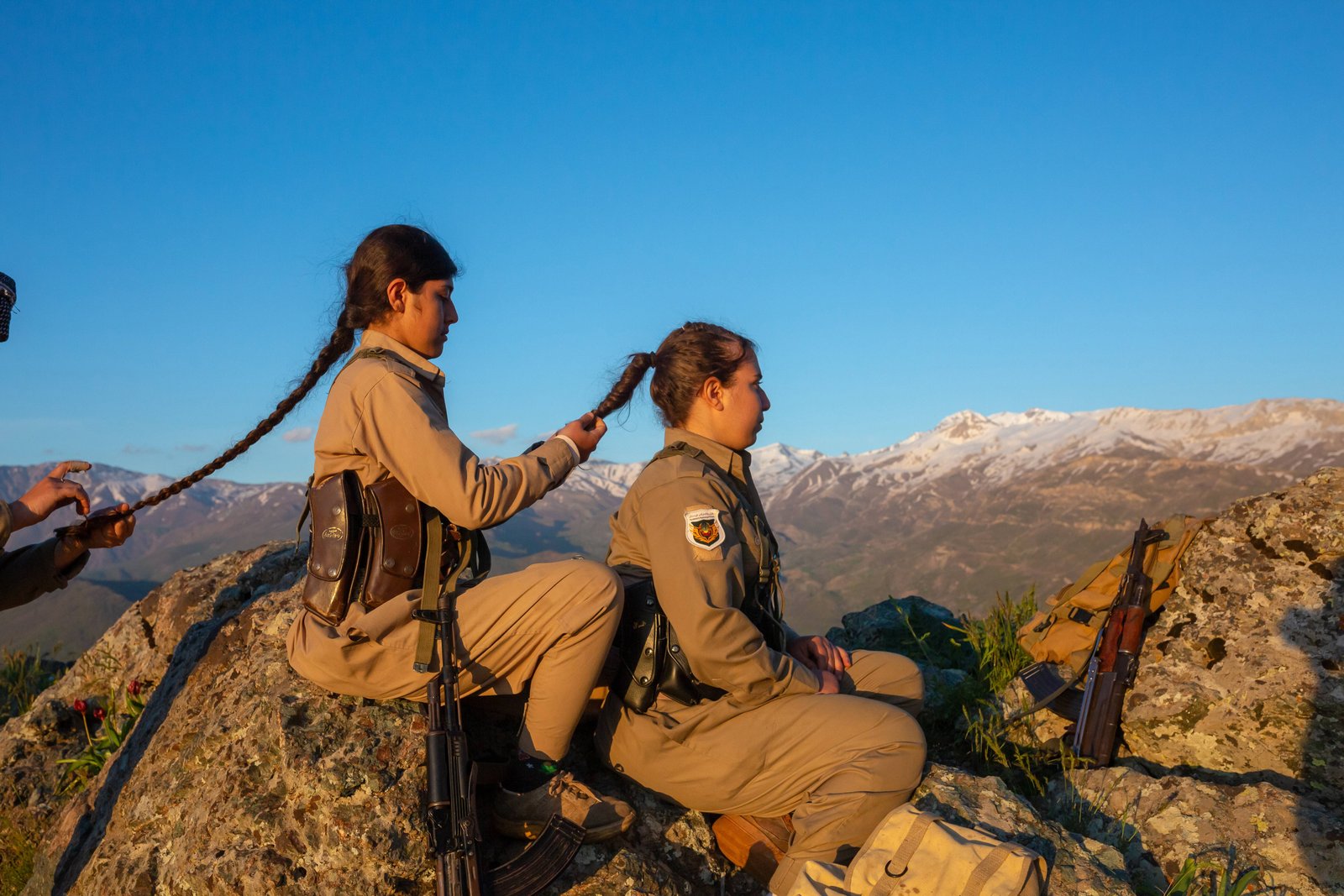
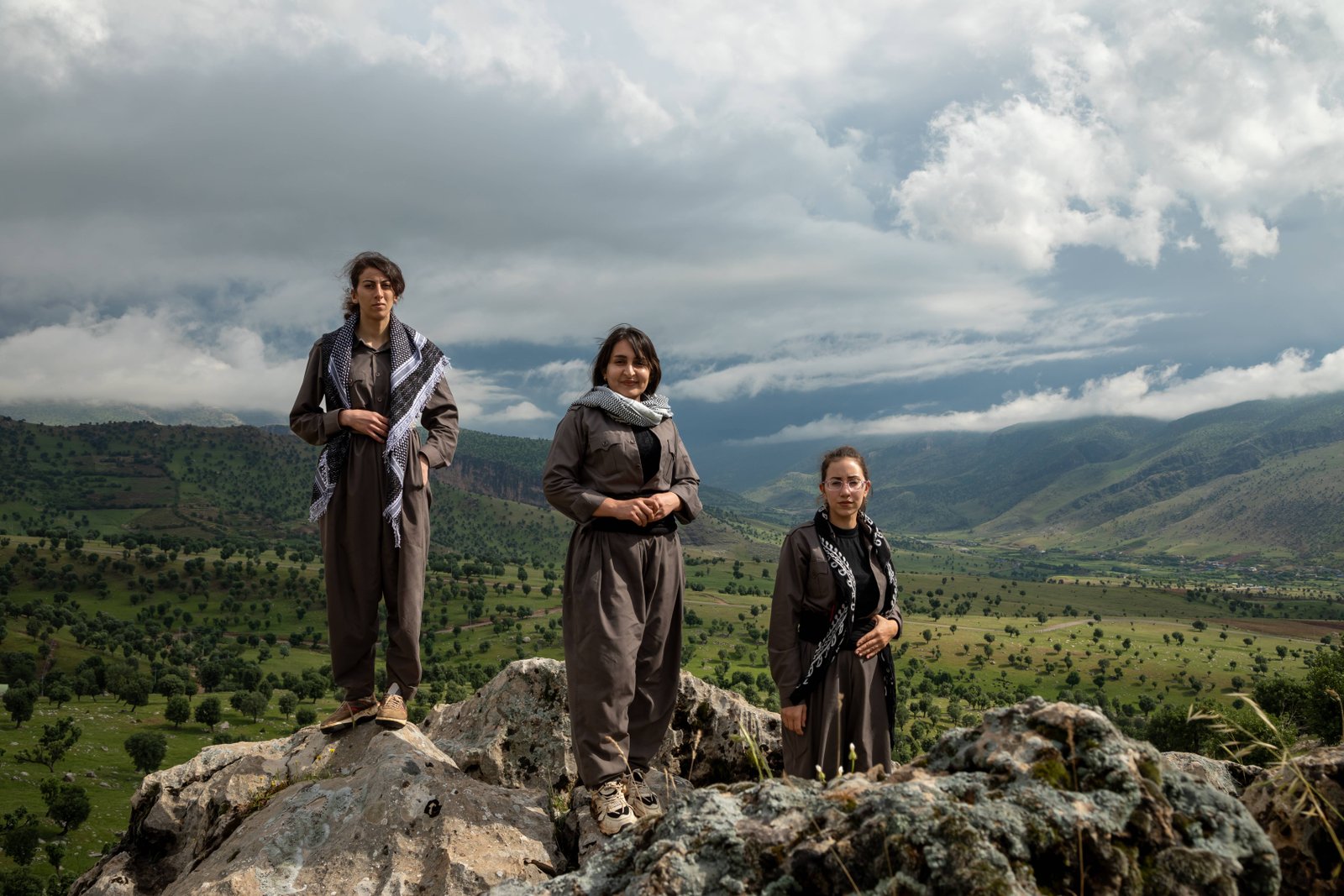
Sarina (right, age 16) and Kamand (age 18) joined the PDKI’s Youth Union (for members under 18) in 2021. Sarina says, “Our land has been occupied, and we fight for its liberation. It is our job as young women to change the mindset of our society”. Kamand adds, “Before joining the KDPI, I lived under an unjust system. Iran’s Islamic regime regards women as servants. I aspire to achieve equality, rights, and respect for myself and others. I appeal to the entire world to bestow support to the Kurdish people, and I urge my fellow Kurdish people to unite for change”.

Camera Make Canon
Camera Model EOS 5D Mark III
Lens 35mm
ISO 500
Aperture f/8
Shutter 1/1000
Focal 35mm
Location Iraq
Gender and National Apartheid

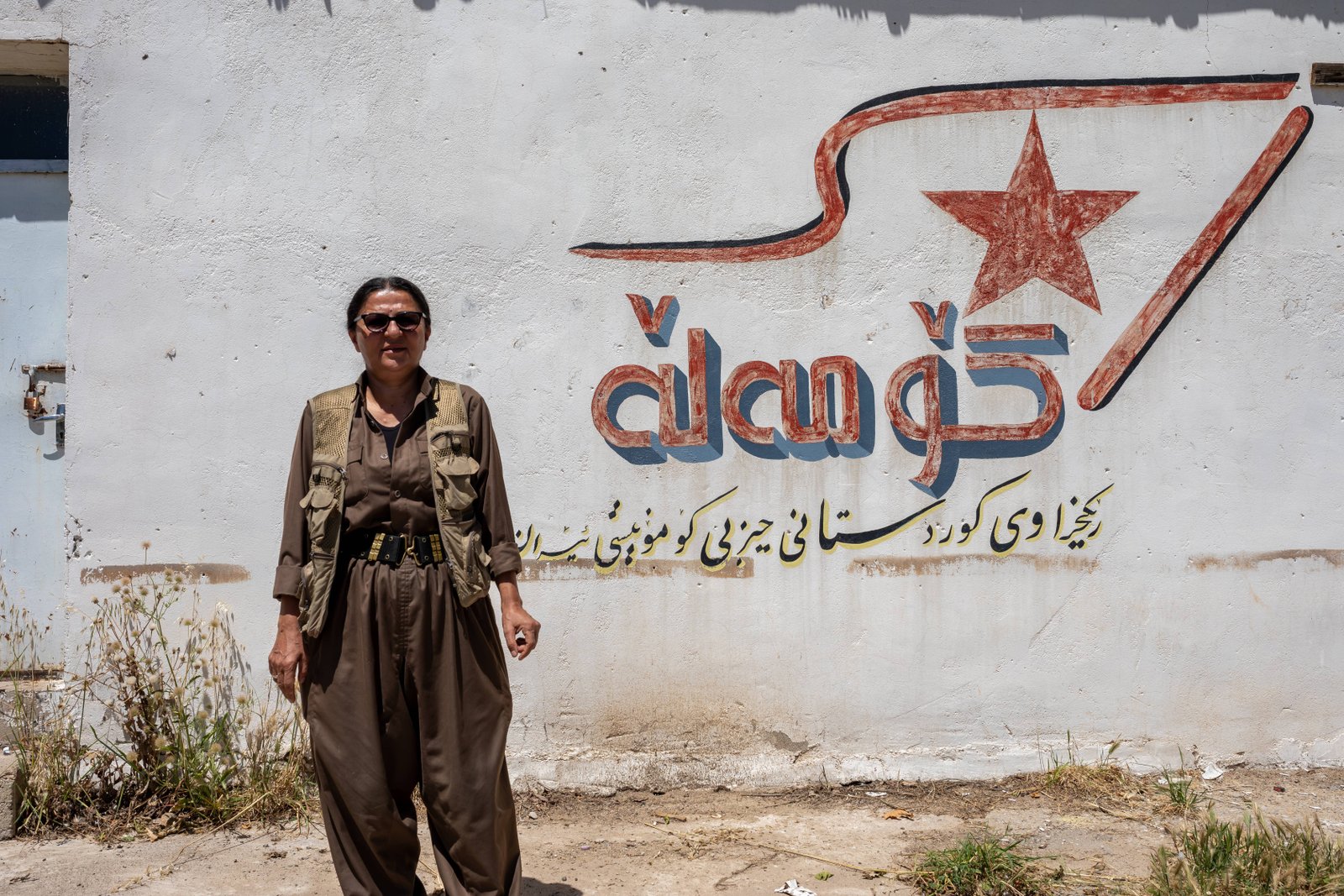
Serwa Nasri, a member of the CPI-Komala executive committee, has been affiliated with the party since she was young. She expresses her motivation for joining Komala as “advocating for our rights and creating a better society with a more promising future”.

Camera Make Canon
Camera Model EOS 5D Mark IV
Lens 35mm
ISO 100
Aperture f/8
Shutter 1/200
Focal 35mm
Location Iraq
Gender and National Apartheid

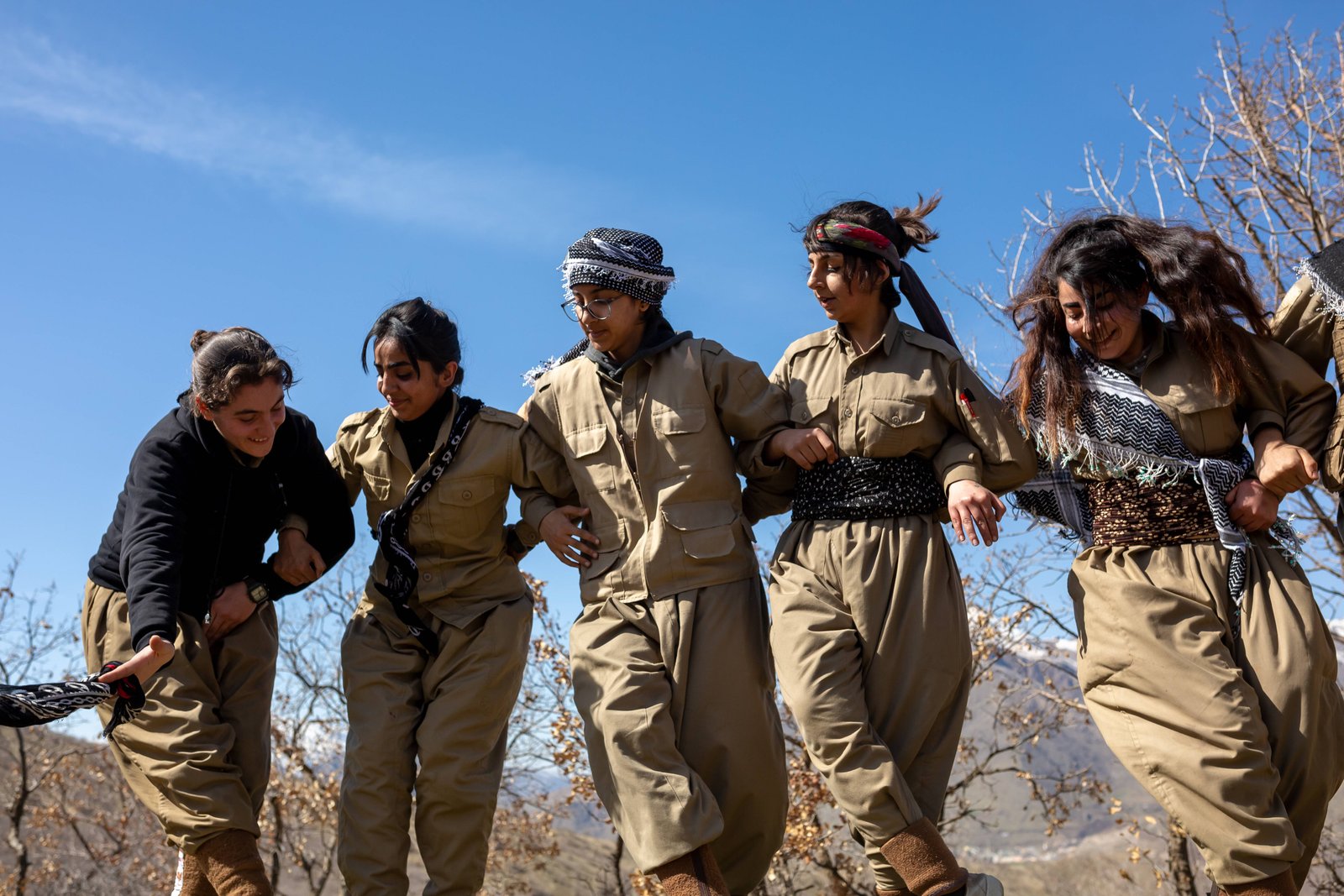
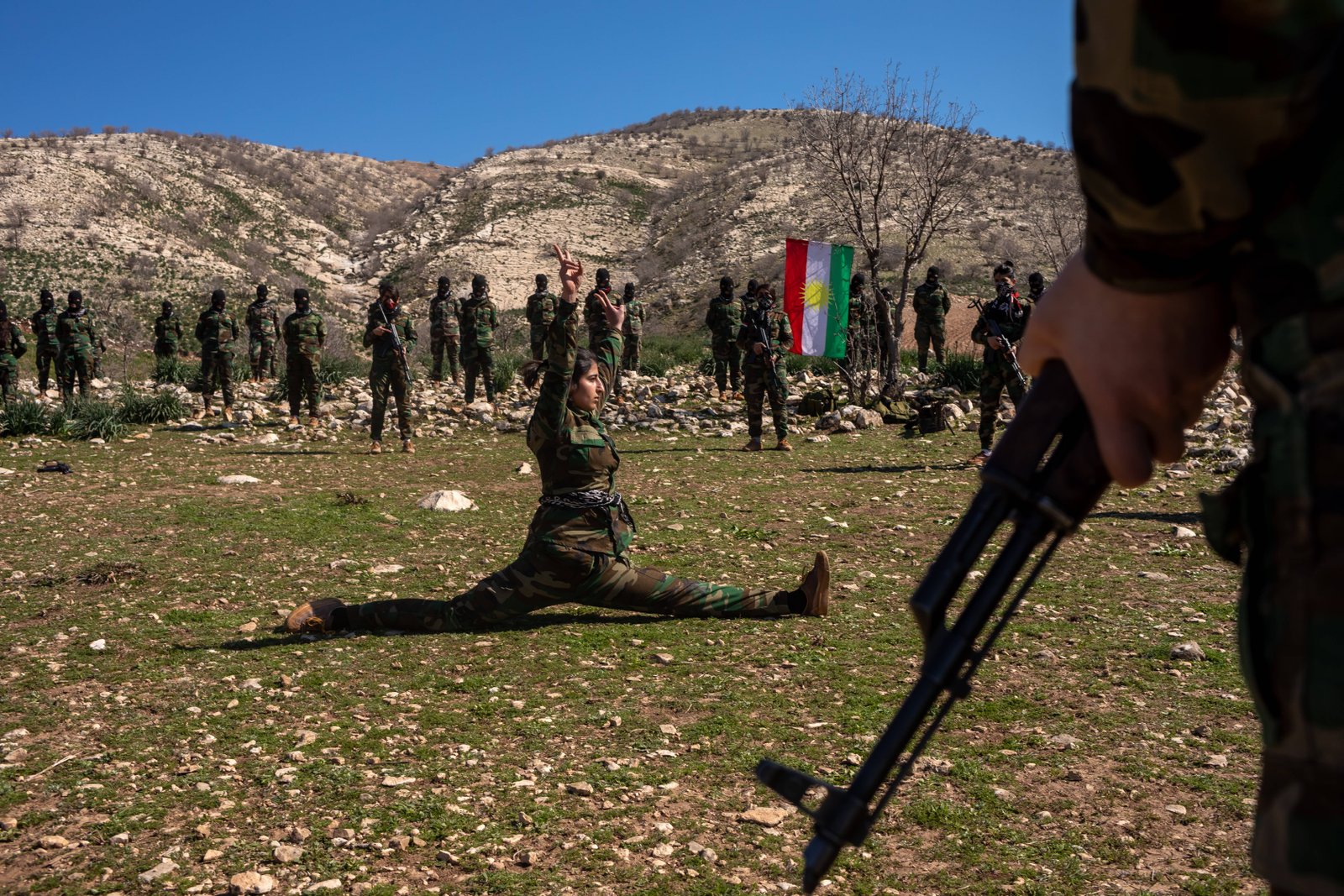
The image shows a dance performance (halperke) of a group of PDKI female Peshmerga fighters near one of their encampments in the mountainous region between East and South Kurdistan. Dance manifests as a practice of resistance, embodying the call for gender equality and the rights of their nation. While many of these women experienced the Iranian regime’s brutality during the Jina, Jiyan, Azadi uprisings, they now, as Peshmerga fighters, face missile and rocket attacks by the same regime.

Camera Make Canon
Camera Model EOS 5D Mark III
Lens 35mm
ISO 250
Aperture f/4.5
Shutter 1/600
Focal 35mm
Location Iraq
Gender and National Apartheid

Renas (age 30) from Bijar, joined the Peshmerga forces of Khabat in 2020. She explains, “To be part of the struggle for the liberation of my occupied homeland is the primary reason for me joining the Kurdish movement. I dream that we can proudly raise our Kurdish flag in a free Kurdistan.”

Camera Make Canon
Camera Model EOS 5D Mark IV
Lens 35mm
ISO 1250
Aperture f/2.8
Shutter 1/160
Focal 35mm
Location Iraq
Gender and National Apartheid

According to women who joined Komala after the Jin, Jiyan, Azadi uprisings, “The escalating repression and state violence that have occurred following the uprisings prove that the notion of security and living a peaceful life has completely vanished in Kurdistan. As women and active participants in the uprisings after the regime regained control of the situation, there were no safe places available to us, as the fear of being kidnapped, arrested and raped by regime forces became an overwhelming aspect of our daily lives”.

Camera Make Canon
Camera Model EOS 5D Mark IV
Lens 35mm
ISO 100
Aperture f/10
Shutter 1/200
Focal 35mm
Location Iraq
Gender and National Apartheid

he female Peshmerga fighters from PAK undergo intense daily educational, physical, and military training. The camp’s training leader states, “A liberated Kurdistan requires a well-trained and prepared army”.

Camera Make Canon
Camera Model EOS 5D Mark IV
Lens 35mm
ISO 200
Aperture f/8
Shutter 1/640
Focal 35mm
Location Iraq
Gender and National Apartheid

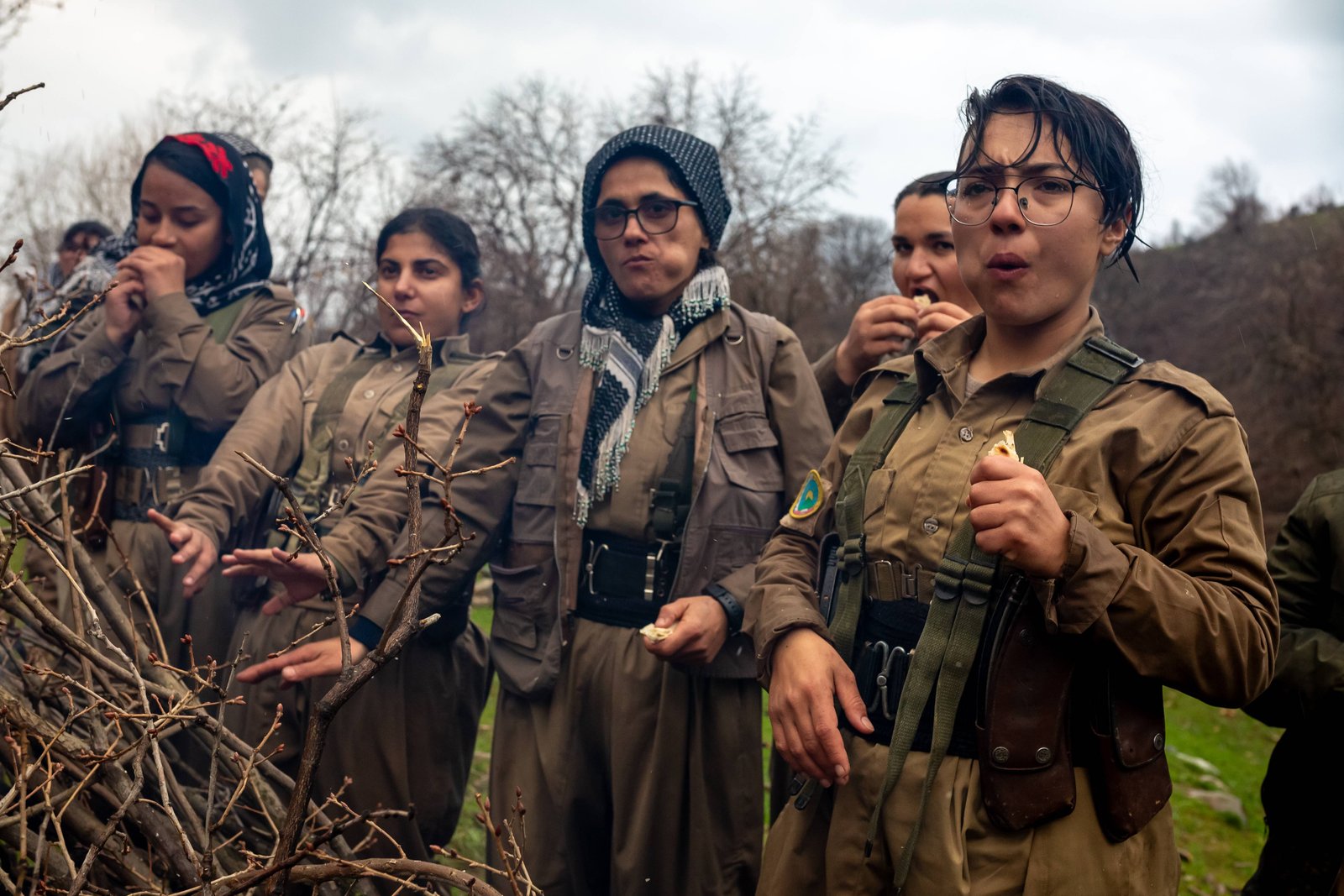
A group of female PDKI Peshmerga fighters are having sandwiches and warming themselves after a long day of training. Hediya (age 25) says, “Under the regime that has occupied my land, any expression of Kurdish identity is subject to punishment. The term Kurd and any discussions about Kurdish identity are criminalized. After attending university, I became acutely aware of the linguicide, and cultural genocide inflicted upon the Kurdish people.”

Camera Make Canon
Camera Model EOS 5D Mark III
Lens 35mm
ISO 1250
Aperture f/5.6
Shutter 1/200
Focal 35mm
Location Iraq
Gender and National Apartheid

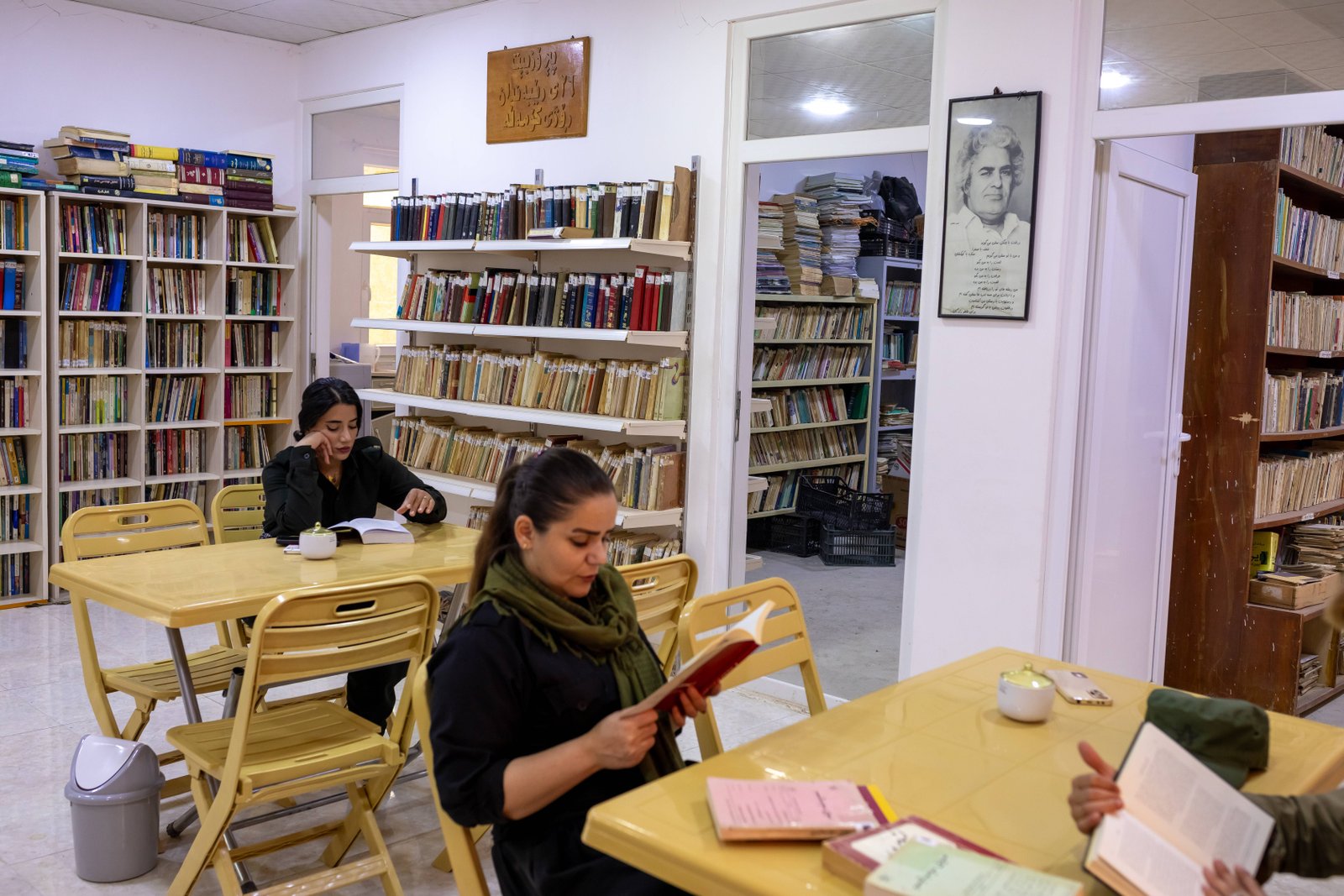
Two female Peshmerga fighters from CPI-Komala study at one of their locations in South Kurdistan. “Reading is a crucial component of our daily routine. Imagine our library as a brain-training laboratory”.

Camera Make Canon
Camera Model EOS 5D Mark IV
Lens 35mm
ISO 800
Aperture f/4
Shutter 1/160
Focal 35mm
Location Iraq
Gender and National Apartheid

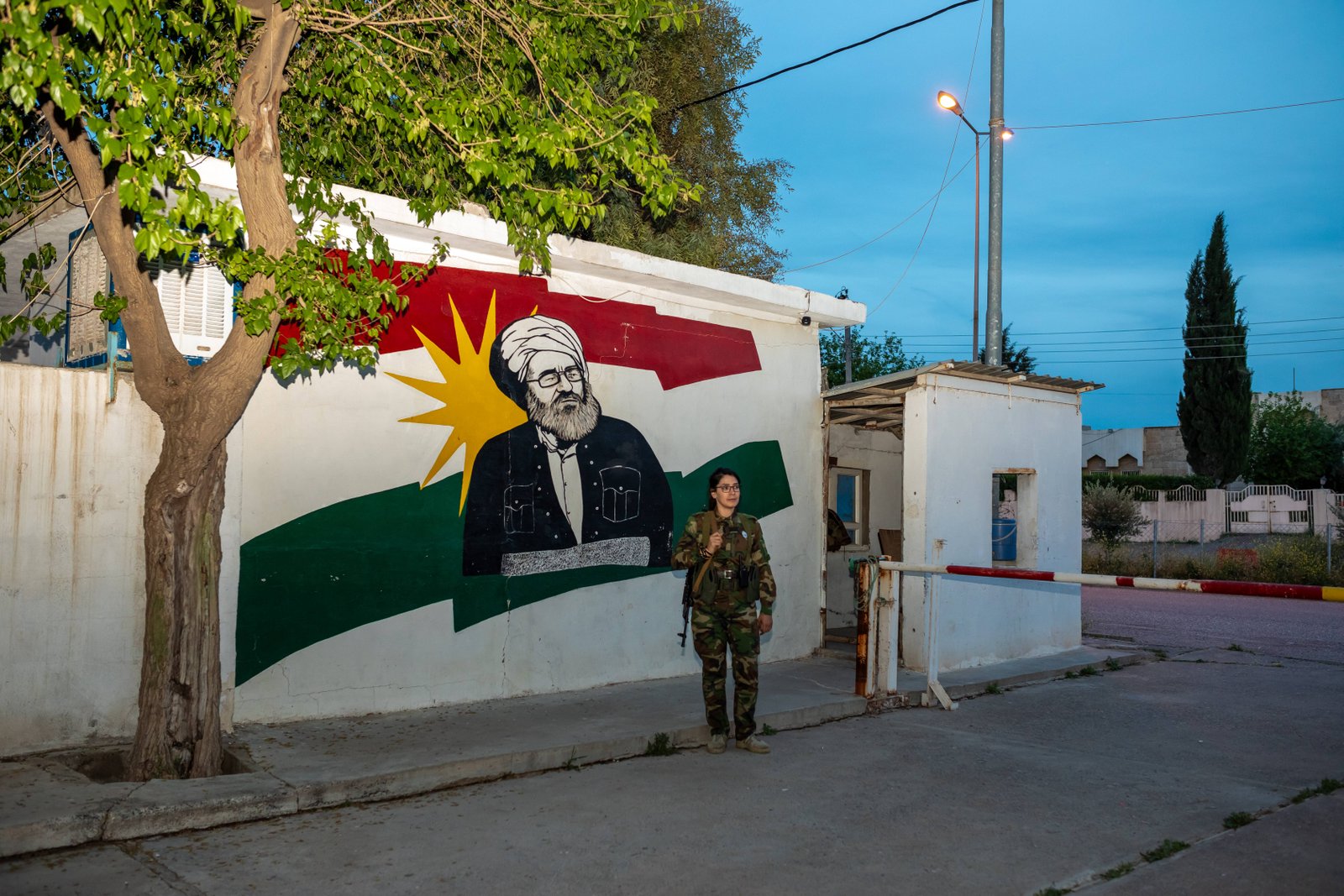
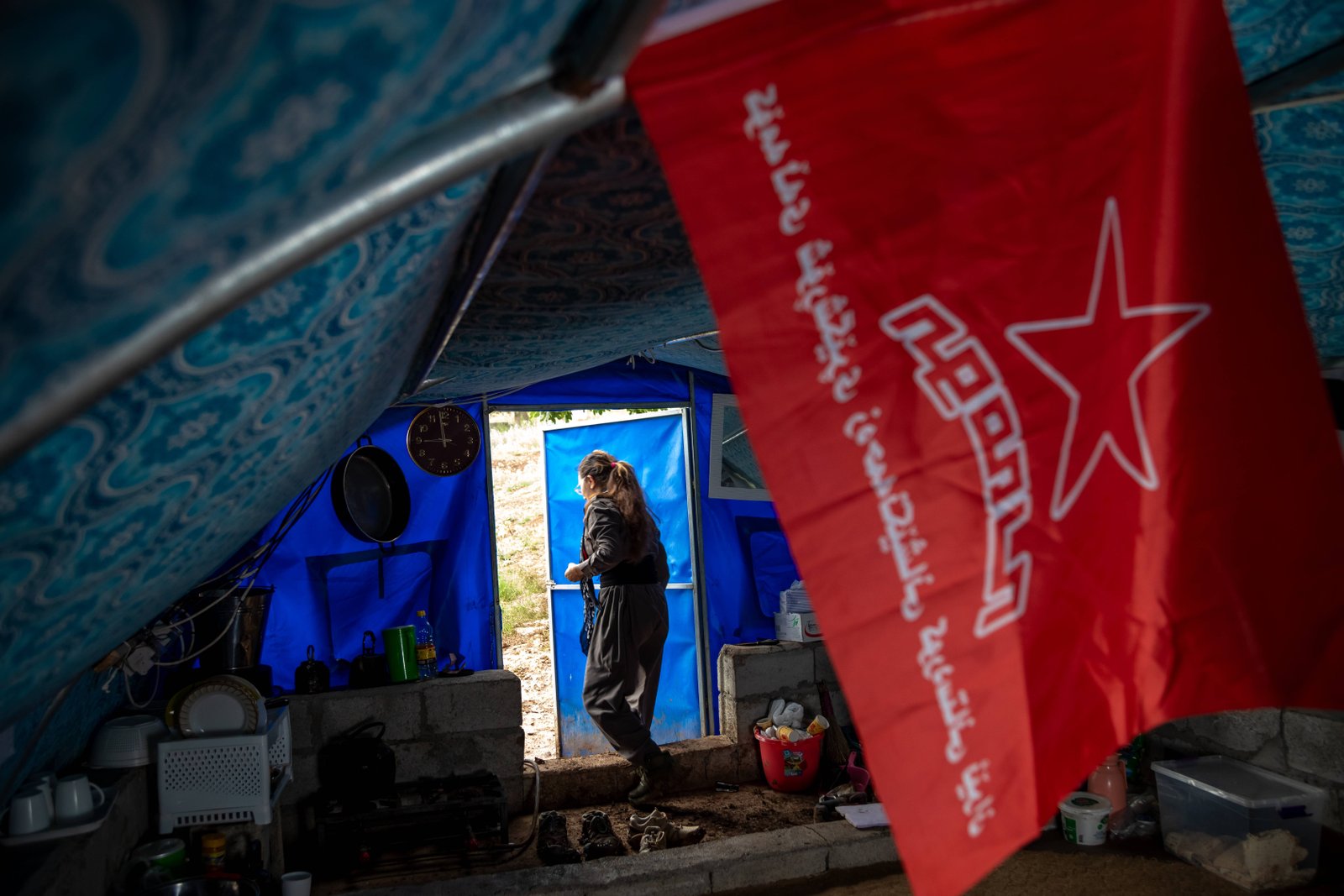
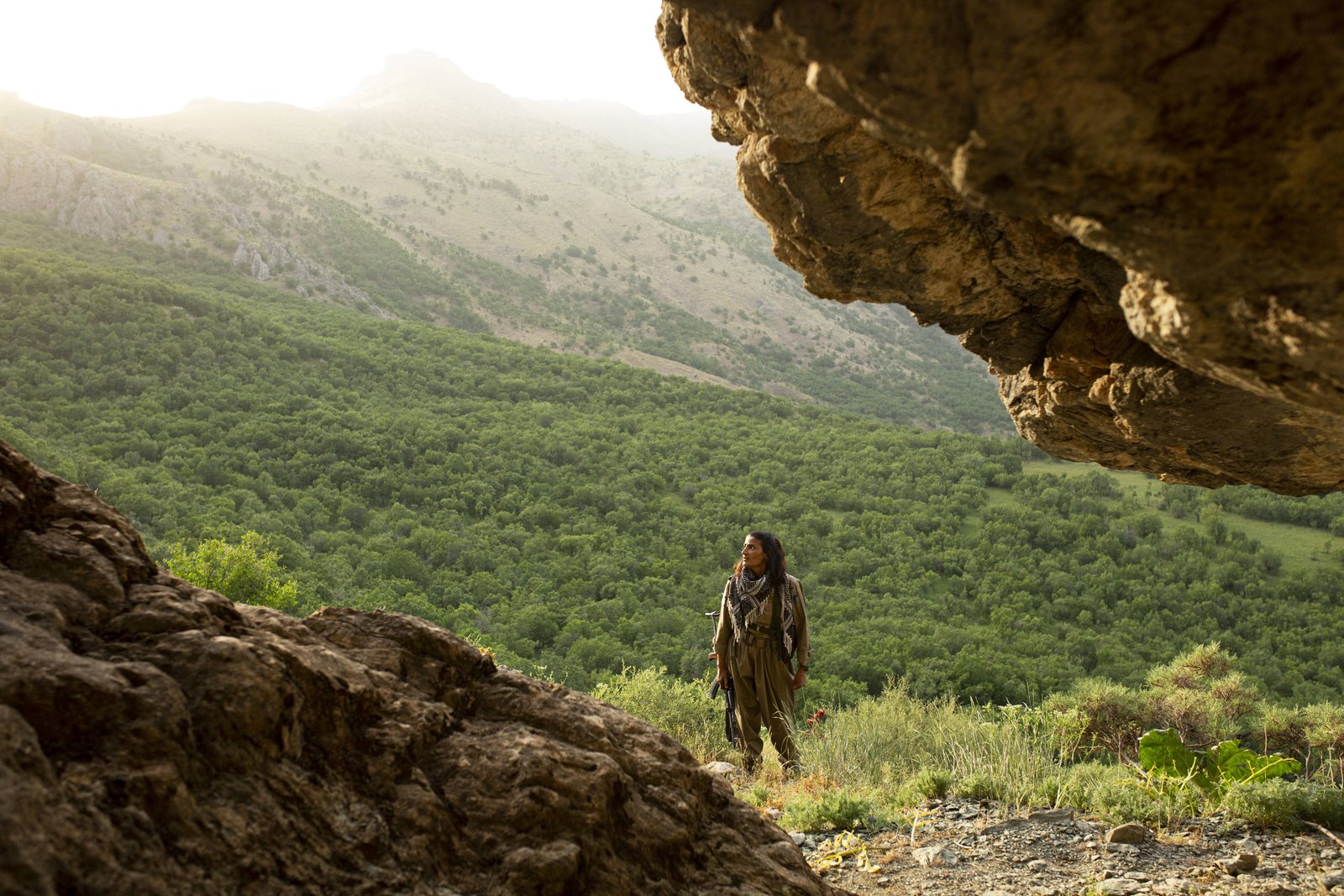
A female member of Komala in one of their bases in the mountains between East and South Kurdistan, on the Iraqi side of the border.

Camera Make Canon
Camera Model EOS 5D Mark IV
Lens 28mm
ISO 640
Aperture f/4
Shutter 1/100
Focal 28mm
Location Iraq
Gender and National Apartheid

This photo shows a group of PDKI female Peshmerga fighters based in Iraqi Kurdistan. Each of these women has faced discrimination and tyranny, forcing them to leave their loved ones, families, and homeland.

Camera Make Canon
Camera Model EOS 5D Mark III
Lens 35mm
ISO 250
Aperture f/8
Shutter 1/1000
Focal 35mm
Location Iraq
Gender and National Apartheid

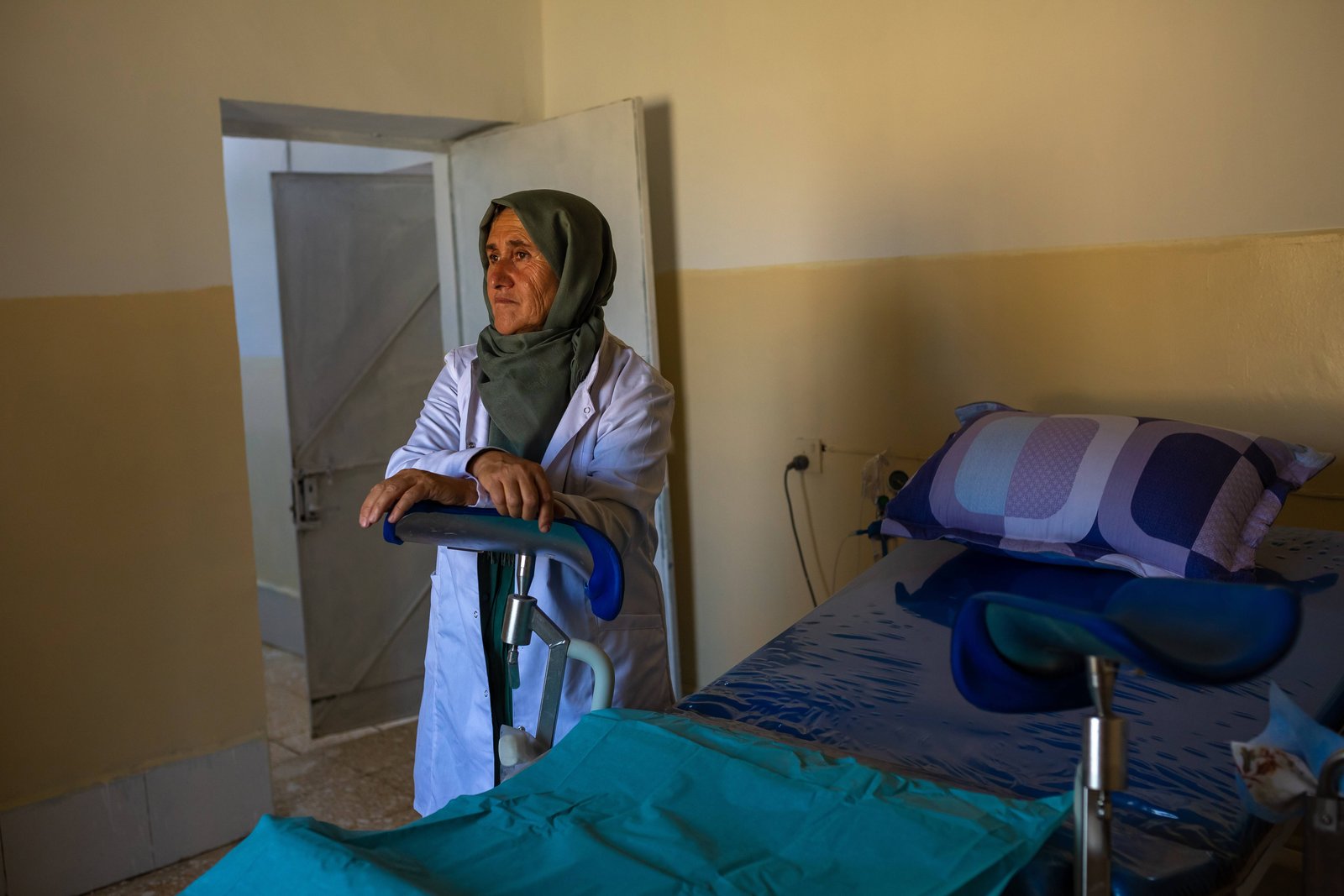
Hawre (age 55) is from Bukan and joined the PDKI Democratic Youth Union in the summer of 1983. She states, “Later, I attended the PDKI medical facility and enrolled in a Doctors Without Borders nursing and midwifery program. Over the last 36 years, I have served as a medic for the Peshmerga, the families associated with the KDPI, and the local community near our medical center”.

Camera Make Canon
Camera Model EOS 5D Mark III
Lens 35mm
ISO 800
Aperture f/2.8
Shutter 1/500
Focal 35mm
Location Iraq
Gender and National Apartheid

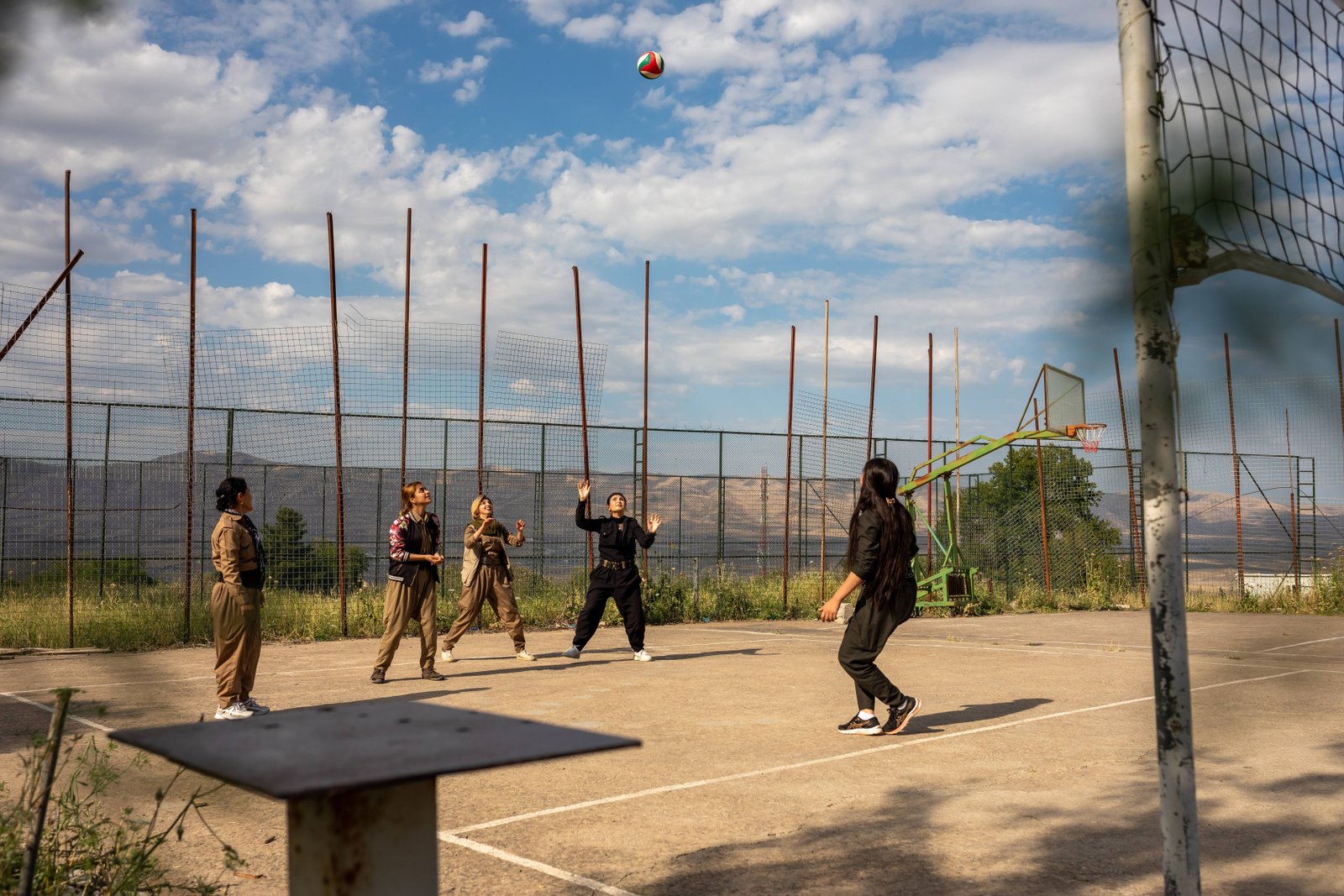
Female Peshmerga fighters from CPI-Komala play volleyball. “The goal of ensuring women’s rights, to be themselves, and pursue their desires and dreams drove us to join Komala”.

Camera Make Canon
Camera Model EOS 5D Mark IV
Lens 35mm
ISO 250
Aperture f/5.6
Shutter 1/1250
Focal 35mm
Location Iraq
Gender and National Apartheid

Two female PDKI Peshmerga fighters during physical training. Nadia claims, “Within the KDPI, women are respected equally and assigned roles according to their merit. Here, we are free to express our thoughts and offer criticism, as the party emphasizes the importance of the realization of women’s rights.”

Camera Make Canon
Camera Model EOS 5D Mark III
Lens 35mm
ISO 250
Aperture f/8
Shutter 1/400
Focal 35mm
Location Iraq
Gender and National Apartheid

Sahar, 18, is from Javanrud in Rojhelat – the unofficial name Kurds use for Iranian Kurdistan. She left on 28 April 2021 and has been a member of the exiled Kurdish Democratic Party of Iran (PDKI), in the semi-autonomous Kurdistan region in northern Iraq, for about two years. The KDPI, founded in 1945, seeks democracy and autonomy for Kurds in Iran, where minority Kurds have long been denied the right to self-determination. Women fight alongside men as part of the peshmerga, the PDKI’s military wing.

Camera Make Canon
Camera Model EOS 5D Mark III
Lens 35mm
ISO 250
Aperture f/2.8
Shutter 1/1250
Focal 35mm
Location Iraq
Gender and National Apartheid

The female Peshmerga fighters of the PDKI are trained and prepared to defend themselves and advance the struggle for national and gender liberation in their homeland, Kurdistan.

Camera Make Canon
Camera Model EOS 5D Mark III
Lens 35mm
ISO 1000
Aperture f/5.6
Shutter 1/250
Focal 35mm
Location Iraq
Gender and National Apartheid

Gule (age 60) from Piranshahr joined the PDKI Peshmerga forces in 1987. The Islamic Republic forces frequently apprehended Gule for her clandestine organisational efforts and the assistance she provided to the Peshmerga. Thirty-seven years ago (1987), she was compelled to leave Iran and join the Peshmerga. Gule emphasises that “our movement is committed to ensuring the freedom and prosperity of our nation”.

Camera Make Canon
Camera Model EOS 5D Mark III
Lens 35mm
ISO 1250
Aperture f/2.8
Shutter 1/200
Focal 35mm
Location Iraq
Gender and National Apartheid

A cohort of PAK female Peshmerga fighters posing for a portrait, one says, “Our ranks are teeming with women, and our membership is steadily growing with each passing day”.

Camera Make Canon
Camera Model EOS 5D Mark IV
Lens 35mm
ISO 200
Aperture f/8
Shutter 1/640
Focal 35mm
Location Iraq
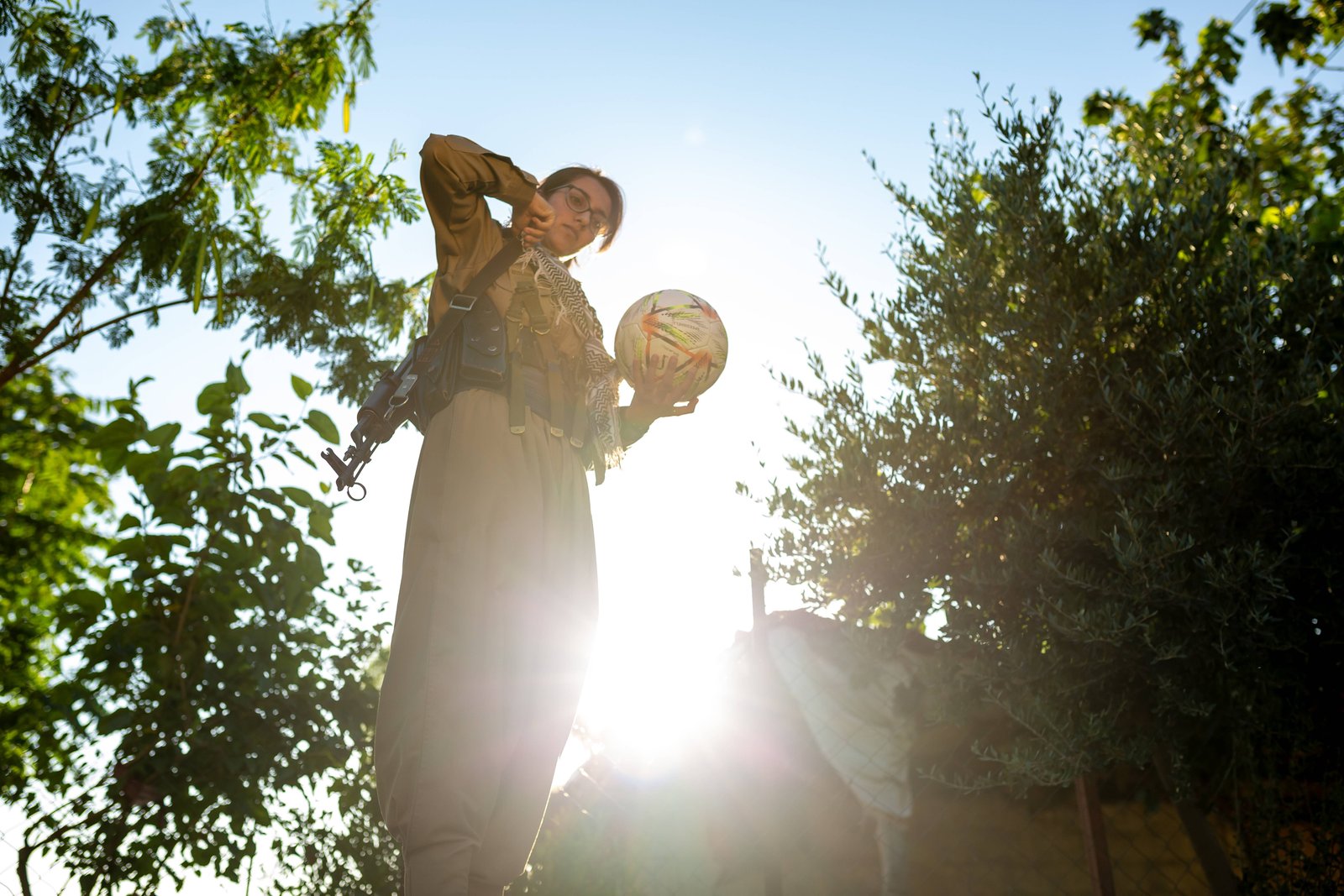
Gender and National Apartheid

Beritan (age 31) from Urmia and joined the PDKI Peshmerga forces in 2023. She asserts, “To me, freedom entails the right to decide my identity, way of life, and desires. I fight for a world that allows equality and justice in the relationships between men and women and across communities”.

Camera Make Canon
Camera Model EOS 5D Mark III
Lens 35mm
ISO 500
Aperture f/4
Shutter 1/500
Focal 35mm
Location Iraq
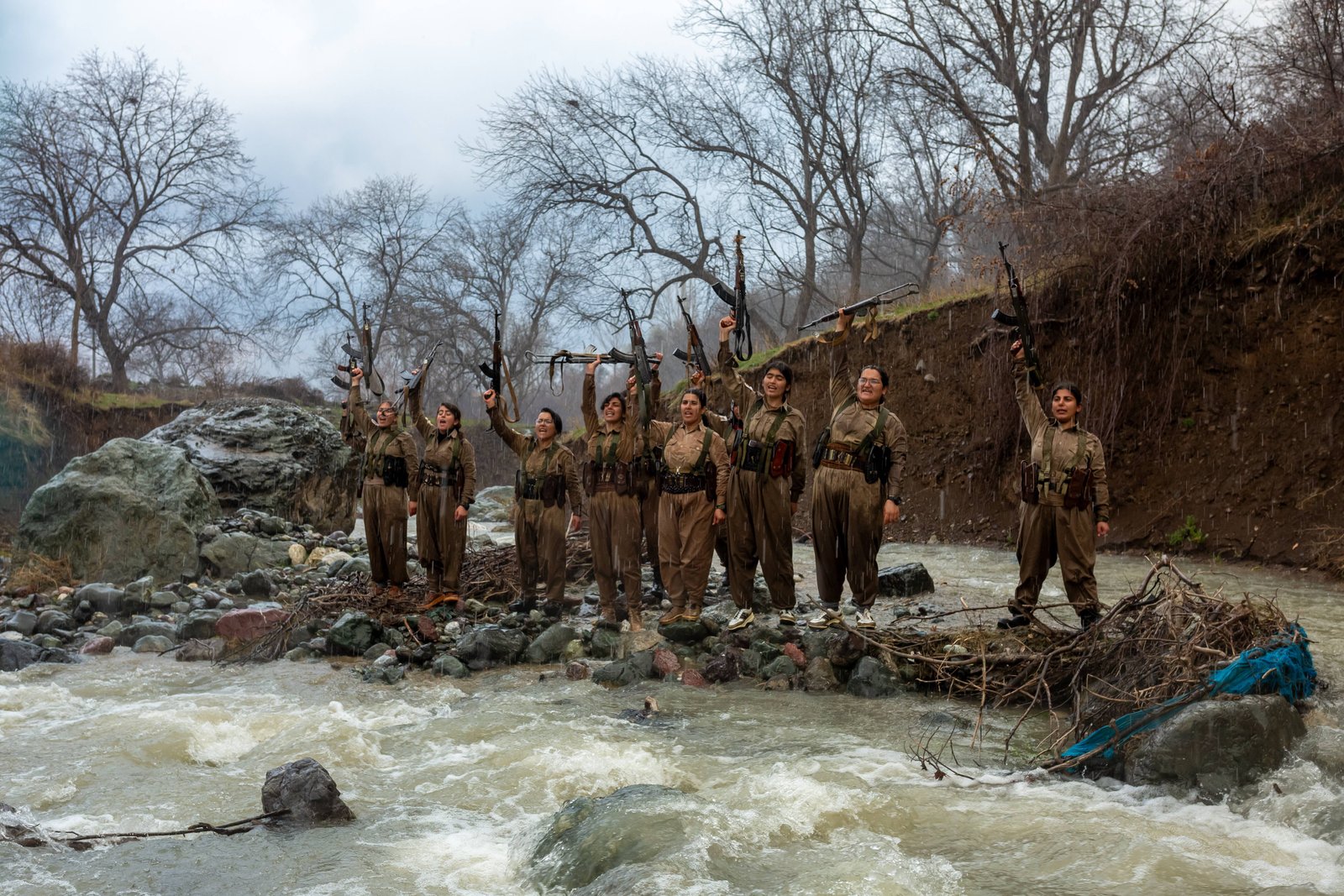
Gender and National Apartheid

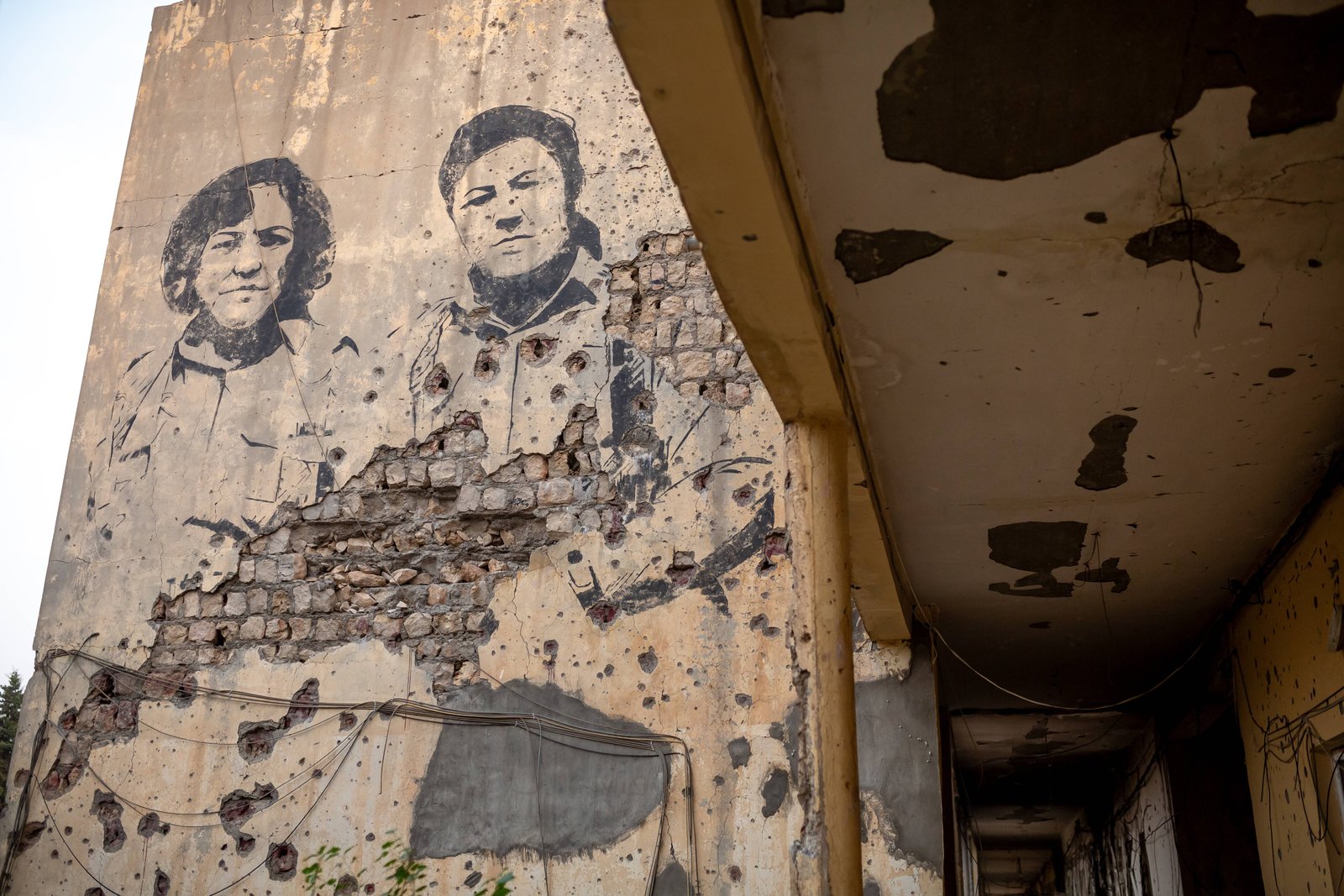
Suhayla Qaderi (right, age 46) and Nasrin Haddad (age 58), two female PDKI leaders, were martyred following an Iranian missile strike on PDKI bases on September 8, 2018. Suhayla had long been a champion for women's rights and served as secretary general within the KDPI Union of Democratic Women of East Kurdistan at the time of her martyrdom. Nasrin joined the KDPI Youth Union in 1982 and served as a teacher for the movement. On September 8, 2018, an IRGC missile attack killed Nasrin and her husband, Mohammad Hassanpour, at the meeting point of the PDKI’s Central Committee in Koy-Sanjaq, South Kurdistan.

Camera Make Canon
Camera Model EOS 5D Mark III
Lens 35mm
ISO 800
Aperture f/2
Shutter 1/500
Focal 35mm
Location Iraq
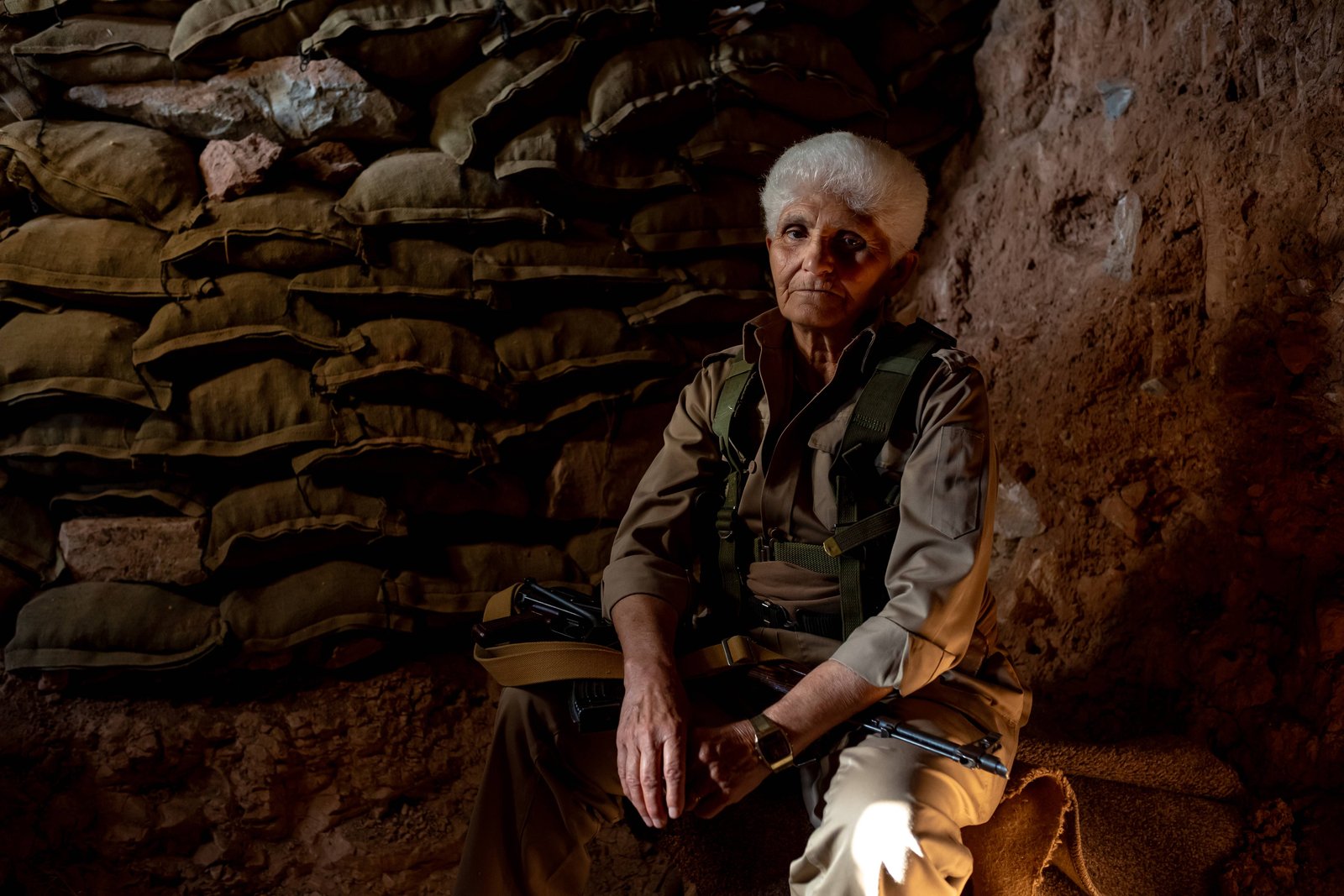
Gender and National Apartheid

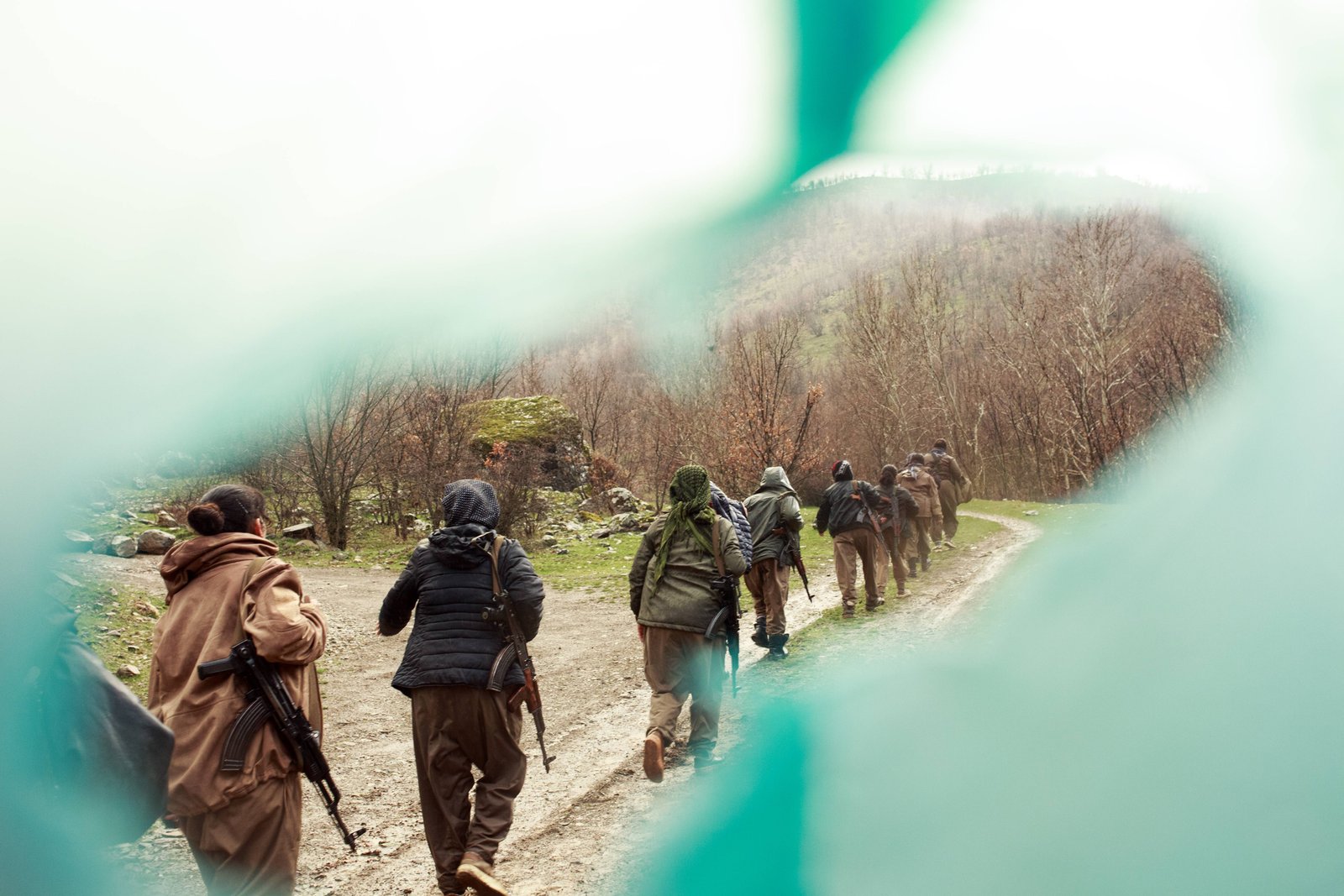
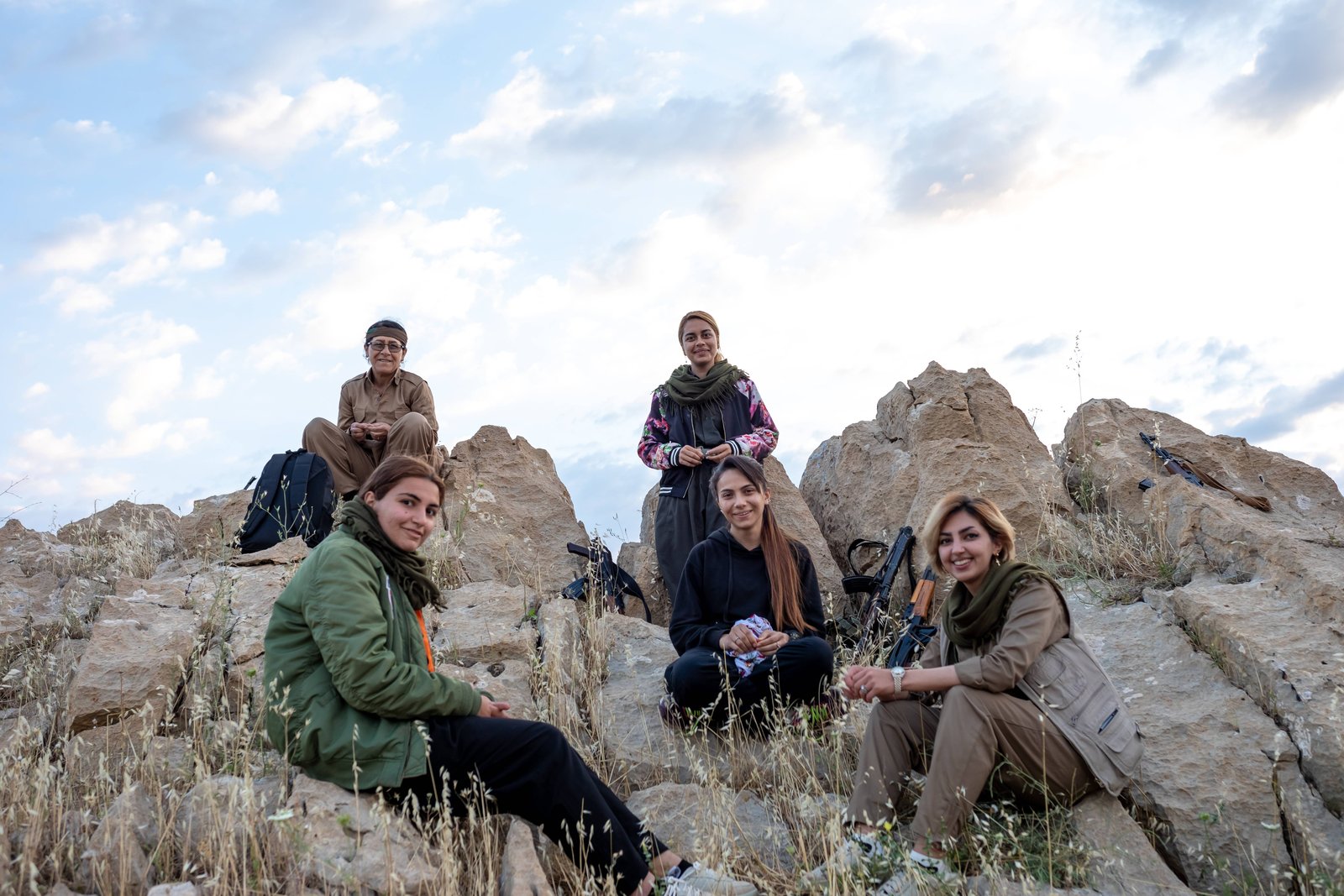
This photo shows a group of PDKI female Peshmerga fighters based in Iraqi Kurdistan. Each of these women has faced discrimination and tyranny, forcing them to leave their loved ones, families, and homeland. After daily military training they return to their base on them mountains on the border of Iraq- Iran.

Camera Make Canon
Camera Model EOS 5D Mark III
Lens 35mm
ISO 1250
Aperture f/5.6
Shutter 1/200
Focal 35mm
Location Iraq
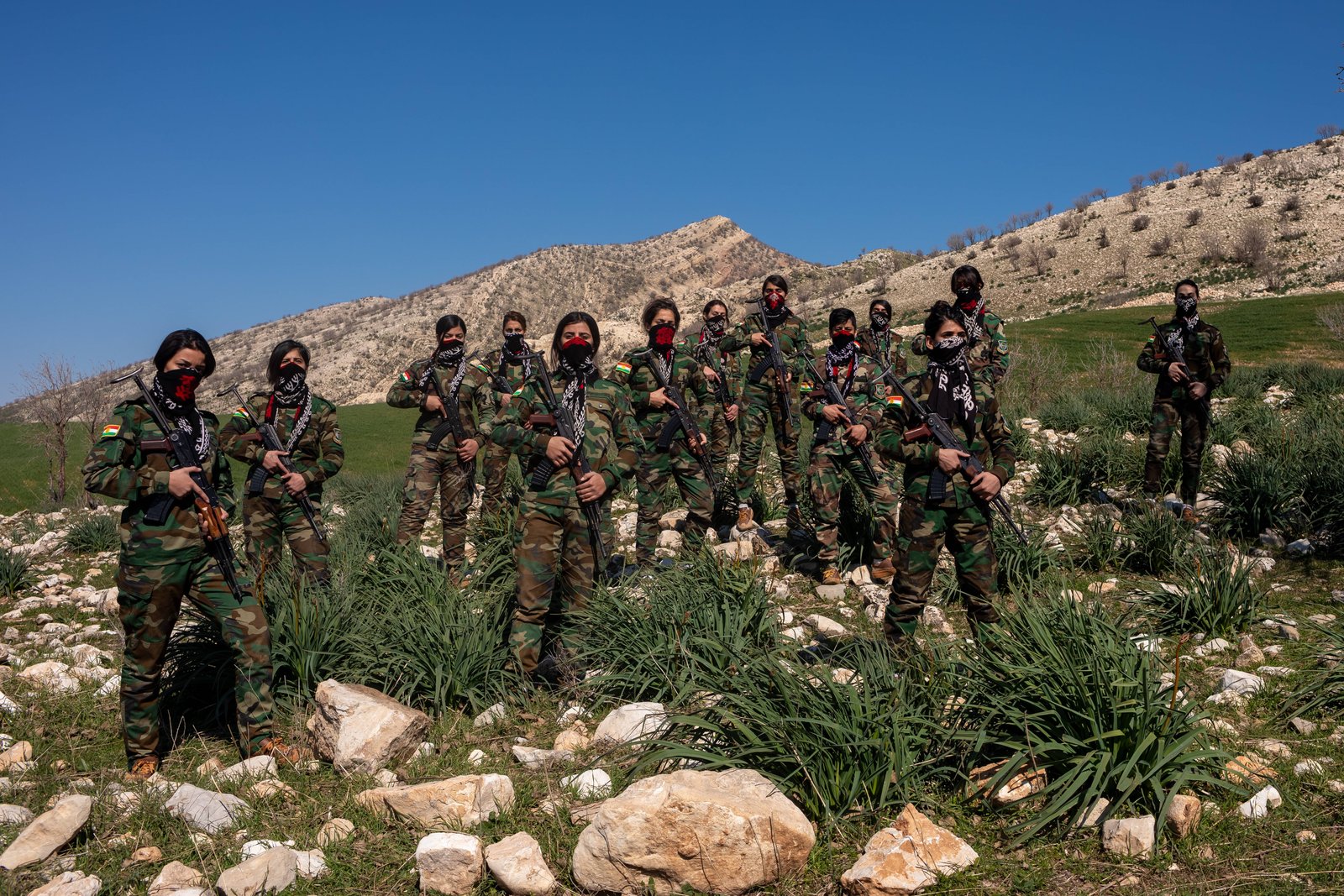
Gender and National Apartheid

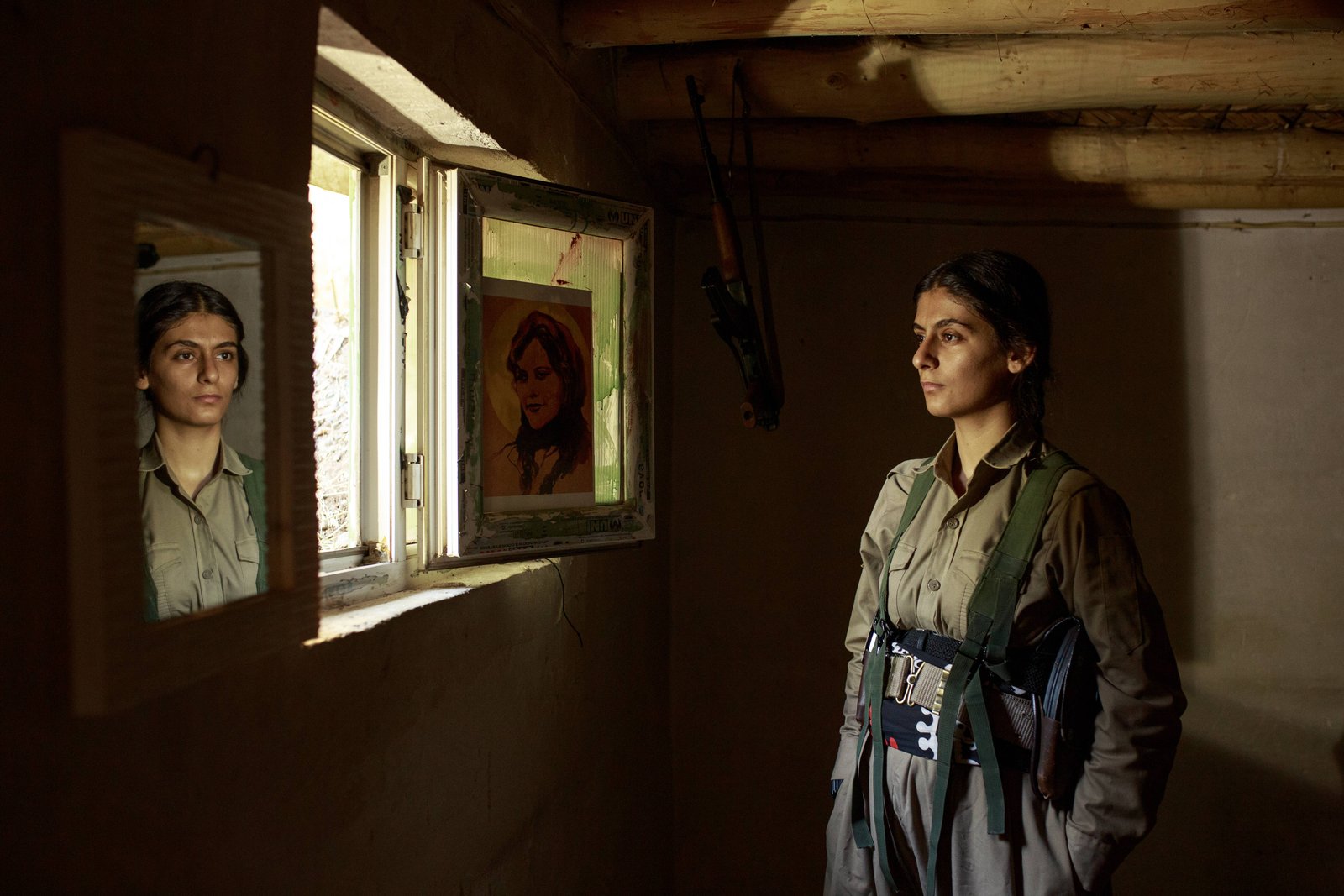
Paywand (18) stands in her barracks next to a portrait of Jina (Mahsa) Amini taped to the window. Paywand joined the PDKI five months ago after fleeing Iran to escape arrest for her participation in the "Jina Revolution" protests. She describes a crackdown where security forces used sexual assault threats and live ammunition to suppress the demonstrations.

Camera Make Canon
Camera Model EOS 5D Mark III
Lens 35mm
ISO 1600
Aperture f/2.8
Shutter 1/80
Focal 35mm
Location Iraq
Gender and National Apartheid

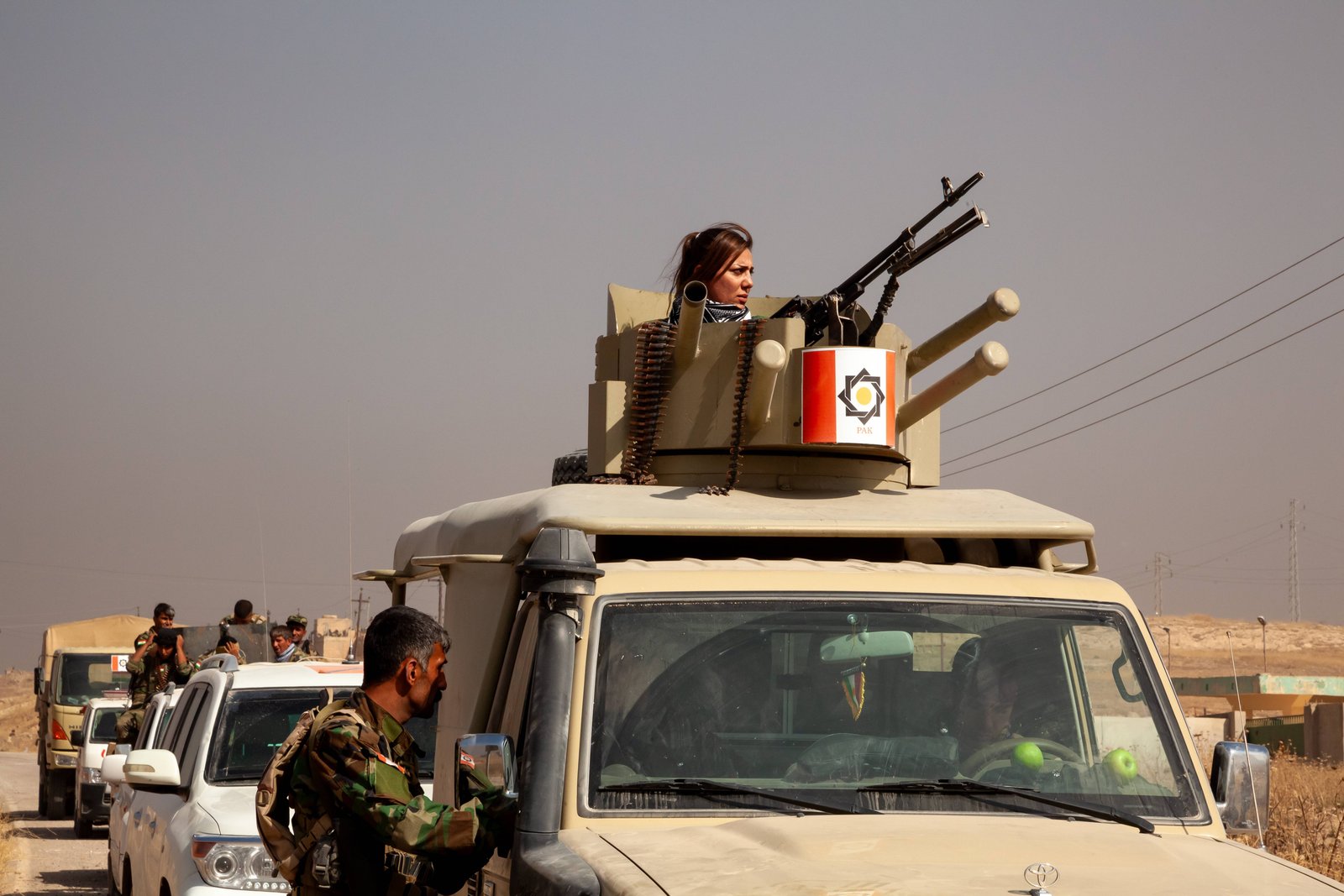
26- In Bashiq, near Mosul (2016), the Peshmerga forces of the PAK were instrumental in defending the Kurdistan Region of Iraq against ISIS attacks. A female Peshmerga fighter from PAK operates a semi-heavy automatic weapon called a PKC.

Camera Make Canon
Camera Model EOS 5D Mark II
Lens 24-105mm
ISO 800
Aperture f/22
Shutter 1/250
Focal 105mm
Location Iraq